Glycol is most often used in thermodynamic systems as a mixture of water and glycol, known as an antifreeze solution. This solution is circulated through the system to provide protection against freezing temperatures.
So what’s a thermodynamic water heater when it’s at home?
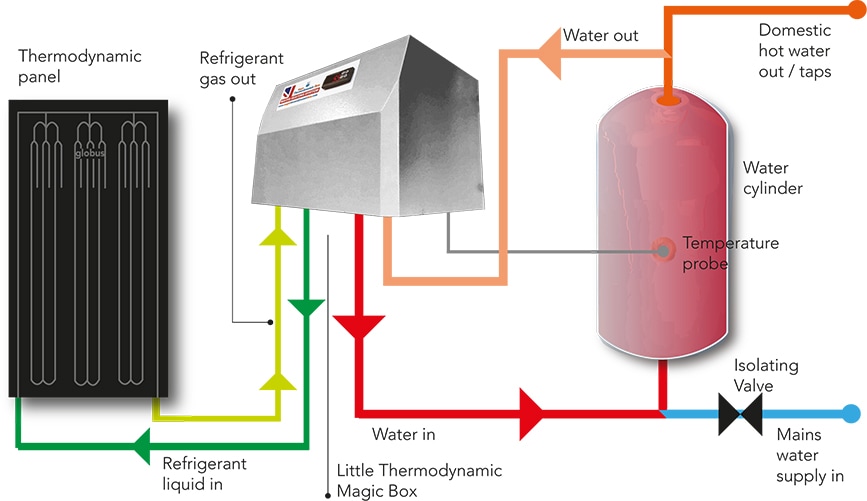
A thermodynamic water heater is a hot water tank fitted with an aerothermal heat pump. The thermodynamic water heater uses a form of energy which is renewable , free and inexhaustive air. It therefore limits the use of fossil energies and emits much less greenhouse gas than a conventional water heater. It allows you to make significant savings on your hot water bill. As part of a renovation project, it can be used in conjunction with other forms of energy.
How does it work?
Just like heat pumps, the thermodynamic water heater is powered by electricity. The energy consumed is used to run the system that extracts calorific energy from the air to heat the water. With a Coefficient of Performance (COP) of up to 3.42, the Kaliko thermodynamic water heater recovers up to 3.42 KWh of energy for 1 KWh consumed.
Enjoying a road operating range from -15C to +42C, the thermodynamic water heater is operational even in winter to guarantee you an abundance of hot water. In extreme temperature conditions, the electrical backup takes over. You will never be short of hot water.
Advantages
Up to 65% savings on your bill compared with a conventional water heater
An environmentally friendly solution that uses clean, renewable energy
70% of your hot water free
The needs of a famil of up to 6 people covered
A return on your investment in less than 3 years
We use cookies to ensure that we give you the best experience on our website. If you continue to use this site we will assume that you are happy with it.